The Legacy of Dr. Donald A. Reed
1935 - 2001
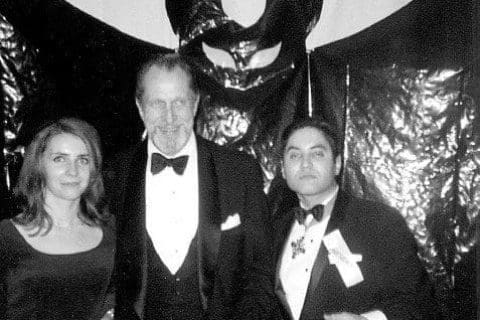
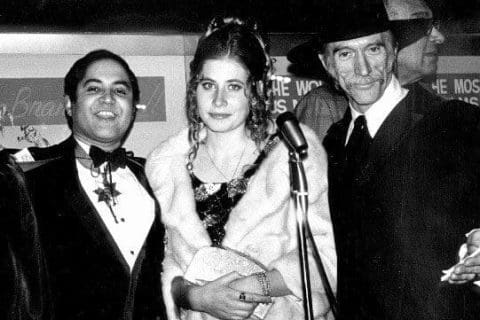
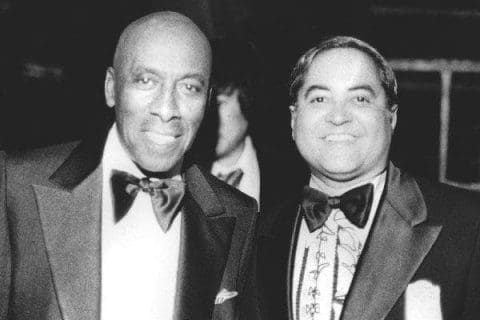
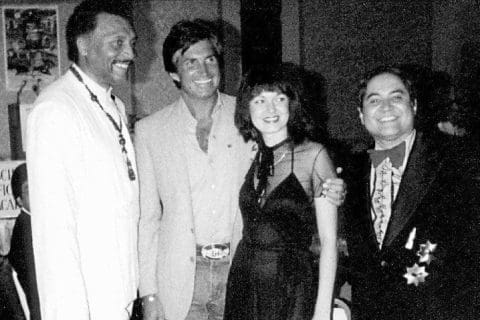
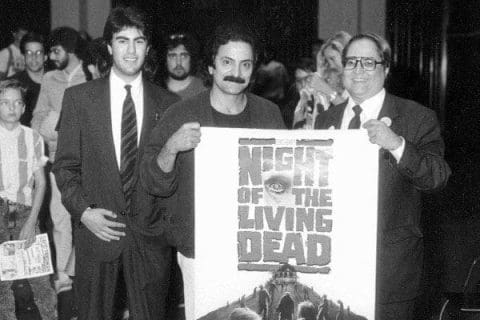
Building an Academy for Genre Entertainment
Dr. Donald A. Reed is remembered as a pioneer of organized recognition for genre entertainment. Over the course of three decades, Reed pursued a clear mission: to honor, recognize, and promote the work of artists and craftspeople in science fiction, fantasy, and horror. He envisioned an academy that would bring together enthusiasts devoted to these forms at a time when few comparable institutions existed.
Reed began developing the idea for an academy in 1972. In an era when the Academy of Motion Picture Arts and Sciences and the Golden Globes were among the only major, widely recognized award-giving bodies in film, Reed set out to create an organization focused explicitly on genre entertainment.
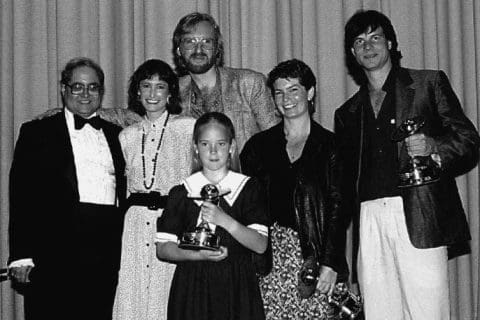
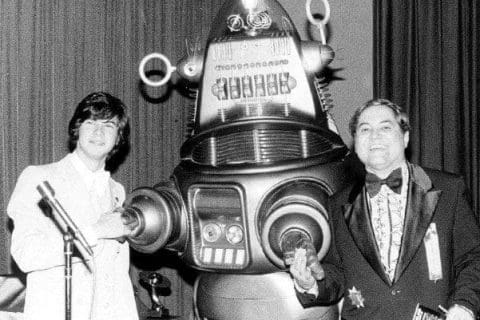
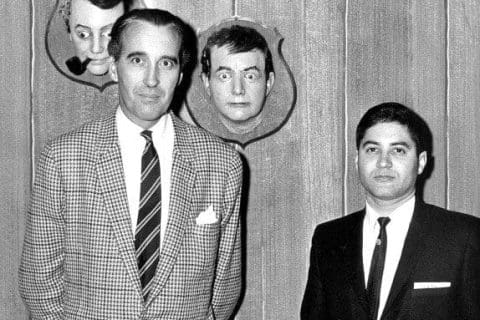
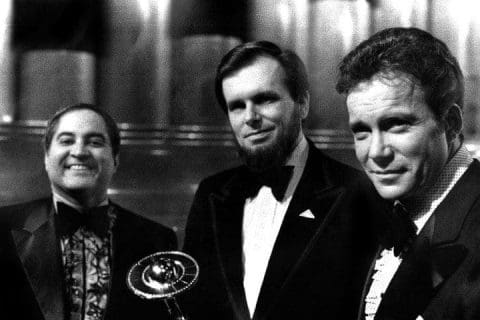
Drawing on contacts cultivated through his earlier organization, the Count Dracula Society, he organized a voting process to recognize achievements in genre film. Following the commercial and cultural impact of Star Wars, Reed expanded his early efforts into a successful awards show in 1978.
In the 1980s, the organization broadened its scope to include television. In the 1990s, it grew again to reflect changes in how audiences consumed entertainment, including home video and emerging DVD releases. Reed, working closely with protégé and longtime friend Robert Holguin, helped develop the idea of honoring DVD releases as a significant new medium. Reed continued pursuing expansion until his death in 2001.
Early Life and Education
Donald A. Reed was born in New Orleans, Louisiana, on November 22, 1935. He moved with his family to Los Angeles at the age of seven.
Reed devoted more than a decade to higher education and earned multiple degrees. He received a Bachelor’s degree from Loyola University in 1957, a Master’s in Library Science from the University of Southern California in 1958, and a Juris Doctor degree from USC in 1968.
Career in Education and Libraries
Reed worked as an educator and taught at Woodbury University, Valley College, and, beginning in 1995, Columbia College. He also served as a librarian at the California Institute of the Arts (CalArts), where he met Walt Disney.
Organizations, Interests, and Writing
Throughout his life, Reed participated in a wide range of organizations. He served as president of the Calvin Coolidge Society, belonged to the Gilbert and Sullivan Society, participated in politics through the Young Democrats of California, and remained a lifelong member of the ACLU. He also belonged to the Titanic Society, served as president of the Don Johnson Fan Club, and authored several books.
His published works include Robert Redford: A Look at His Films, Science Fiction Film Awards, The Vampire on the Screen, and Admiral Leahy at Vichy France.
Reed also founded several organizations, including the Count Dracula Society, the Academy of Family Films and Television, and the Council of Film Organizations. He reviewed films on cable access television through a program titled Reviewing Films From the Academies. He was cited as a leading scholar on Count Dracula (including recognition in the World Almanac Book of Buffs) and maintained membership in organizations such as the Academy of Television Arts and Sciences, the Recording Academy, the Cable Academy, the Academy of Country Music, the Academy of Magical Arts, the Paley Center for Media, and the Golden Satellite Awards.
His interests were wide-ranging and included the Civil War, King Tut, the ordeal of Lizzie Borden, the kidnapping of Charles Lindbergh’s baby, the sinking of the Titanic, and the lives of Abraham Lincoln, Thomas Jefferson, Calvin Coolidge, and others in American political history. He also followed world politics, the operettas of Gilbert and Sullivan, Cole Porter, civil liberties, law, and, most prominently, film—especially science fiction, fantasy, and horror.
Favorite Films and Notable Collections
Reed’s favorite horror film was The Mummy. His favorite fantasy film was The Thief of Bagdad. His favorite science fiction film was Forbidden Planet until Star Wars was released. His favorite film overall was Charlie Chaplin’s City Lights. Other favorites included Abbott and Costello Meet Frankenstein, Casablanca, and Sunset Boulevard.
He once owned a bookstore in Santa Monica. In addition to his library work, he often served as a substitute teacher at schools throughout Los Angeles and worked as a head researcher in a law firm. At one point, he contributed closely to a case involving the civil liberties of a conscientious objector in the 1960s, which set precedent in the United States.
Reed’s collections on film and history were extensive, including one of the largest known collections related to Robert Redford. Although he was invited to donate the materials to a leading university in Utah—where a “Donald A. Reed Room” would have been established—he chose to retain the collection. His book The Films of Robert Redford was published in 1975 and reportedly sold 100,000 copies. Prior to publication, Redford’s assistant contacted Reed to convey that Redford would prefer the book not be published so early in his career. After publication, Reed was later told that Redford had read the book and liked it.
Relationships and Reputation
Over the years, Reed met and befriended many professionals in film and television, including Richard Correll, Douglas Wick, Rouben Mamoulian, Randal Kleiser, Dean Devlin, Gale Anne Hurd, Roger Corman, Gene Roddenberry, George Pal, Vincent Price, Bryan Singer, Larry Cohen, Frank Marshall, Joe Dante, William Friedkin, Ray Bradbury, Robert Wise, Wes Craven, and Dustin Lance Black.
Those who knew Reed often described him as approachable, open, and generous with his time. He was frequently interviewed as a scholar of genre entertainment and was known for teaching and mentoring young adults, inviting them to participate in the academy’s work and leadership. He was succeeded in the organization by Robert Holguin.
Legacy
Reed remained committed to his work and continued engaging college-age students in genre entertainment and in the academy he built. He was known to say that his life was devoted to film, remarking, “I saw a film every day of my life.”
After his death, a special award was established in his name. It is presented to an individual who, in the tradition of Dr. Reed, has contributed to the quality of filmmaking and served as an inspiration to younger filmmakers.